Repair first
We look at the frame, springs, foam and covering separately. If a joint is loose, new cloth will not save it. The honest sequence is inspect, repair, then recover — only if the piece is worth it.

If you can feel the spring, the covering is not the first job
Spring units give a sofa its live sit. When a coil breaks, a clip lets go, or the unit drops, no amount of new fabric will feel right. We open the seat, see whether it is coil, sinuous zig-zag or a sprung unit, and repair that system before talking about cloth.
Photos from underneath, or a description of a sudden drop in one place, matter. Springs are the repair that protects everything you later spend on fabric.
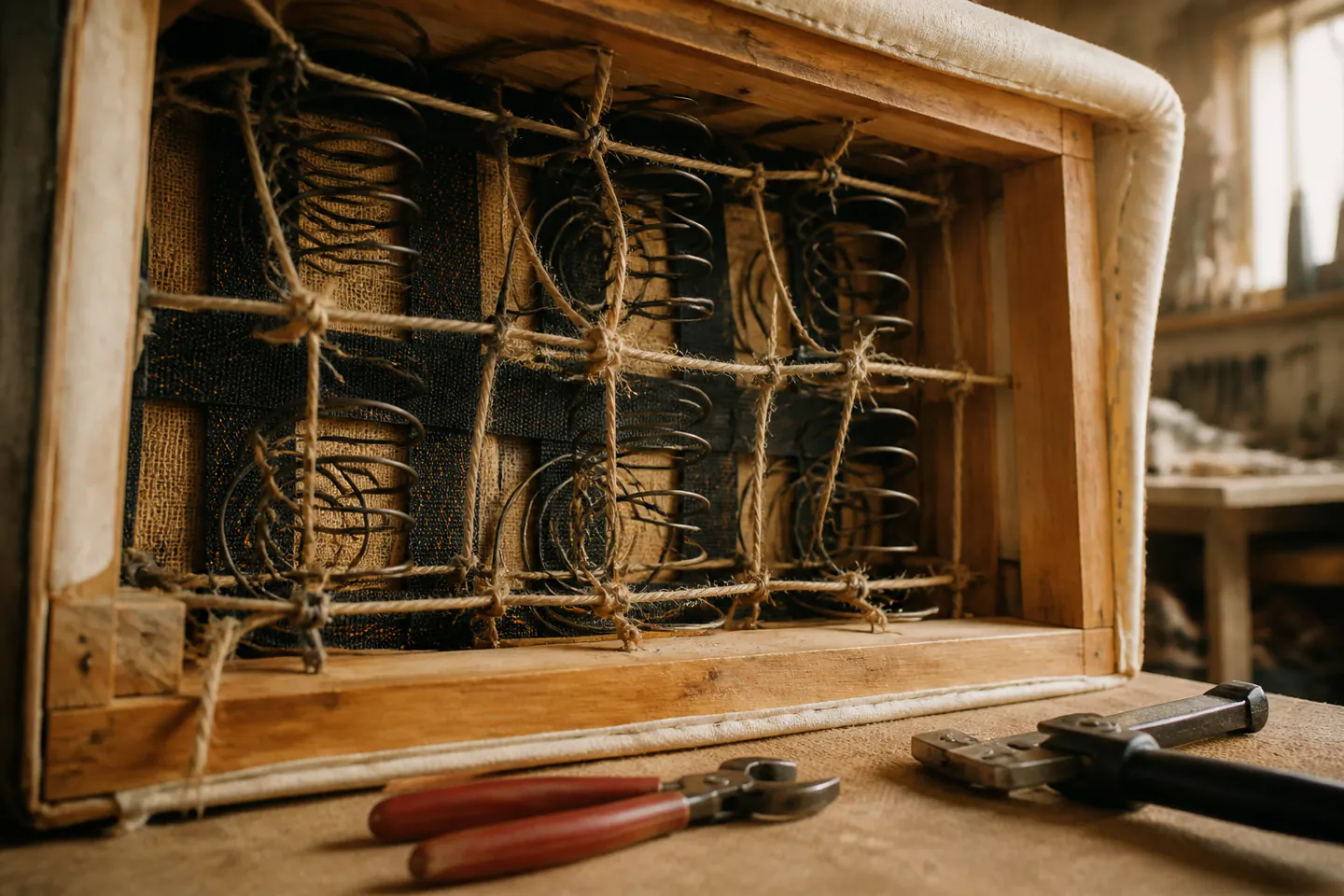
We look at the frame, springs, foam and covering separately. If a joint is loose, new cloth will not save it. The honest sequence is inspect, repair, then recover — only if the piece is worth it.
Some modern frames are chipboard. Some hides are finished. We would rather say a piece is not worth covering than take a recover that fails in months.
We identify the spring type and whether a single break or a failed unit is the issue.
Broken coils, clips or webbing ties replaced so the sit is even again.
Twangs, knocks and one-sided collapse traced to the metal, not the foam.
Springs first. Fabric second. That order saves you doing the job twice.
A clear path from first pictures to workshop finish — so you always know what happens next.
A hole in one spot, a lean, or a metallic noise when you sit.
Covering back to see the unit — sometimes only after strip-down in the workshop.
Coils, clips or replacements fitted and tied.
Calico, foam and covering put back on a sound platform.
What this service does well — and what to weigh up before you commit.
Tell us about the piece — we’ll reply with practical next steps from the Hayes workshop.
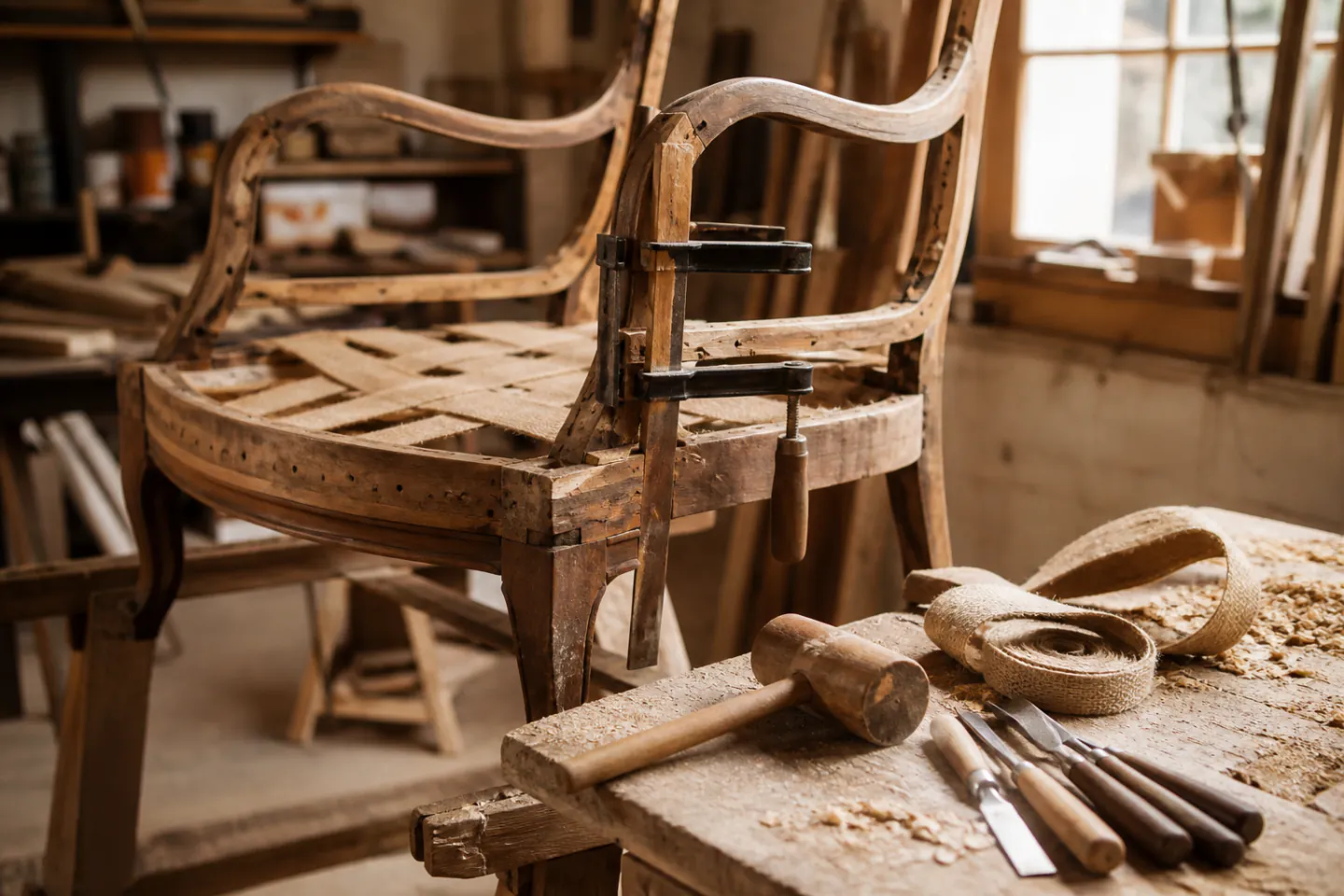 Furniture repair
Furniture Repair
Structural and comfort repairs for sofas, chairs and soft furnishings.
View service
Furniture repair
Furniture Repair
Structural and comfort repairs for sofas, chairs and soft furnishings.
View service
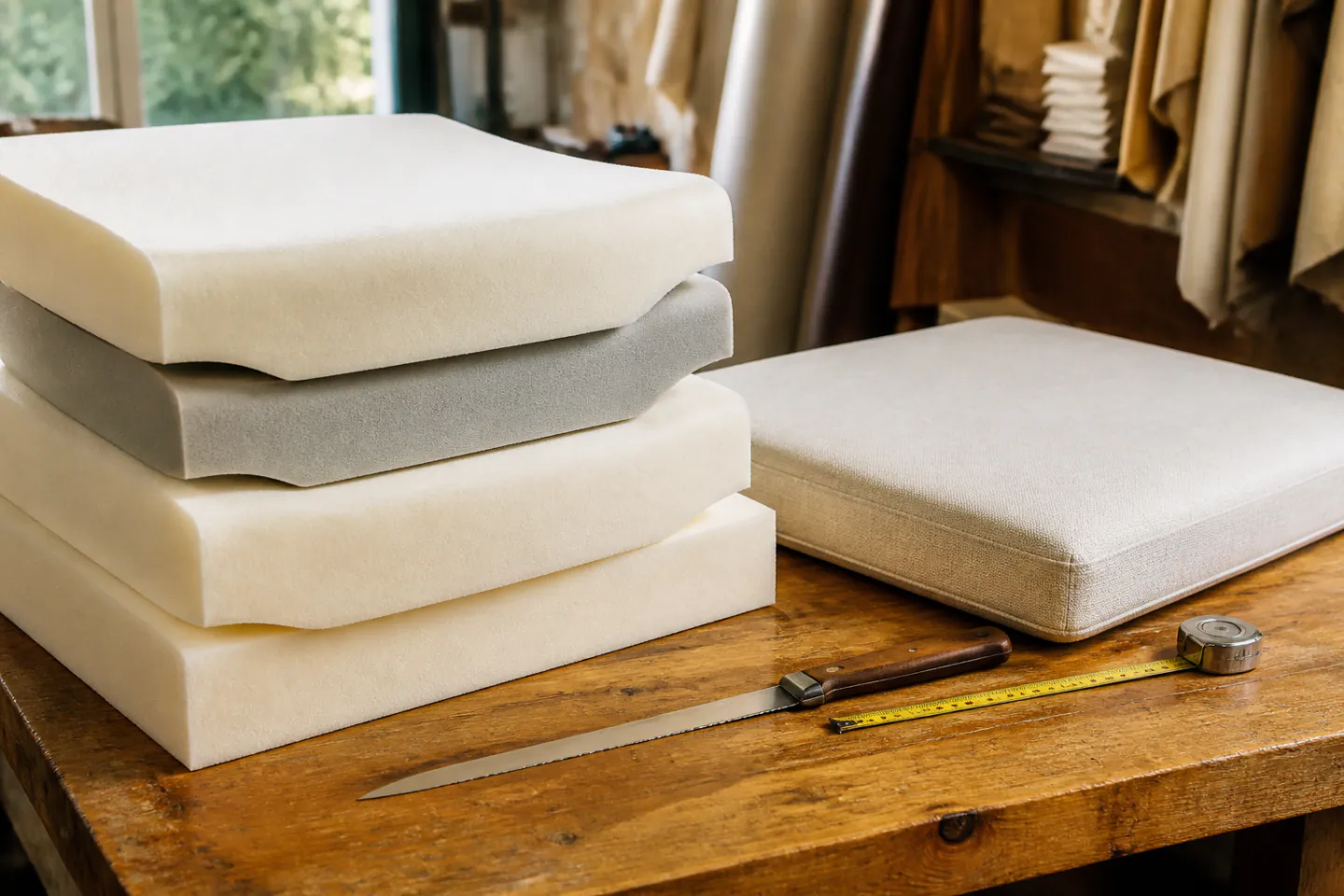 Foam
Foam Replacement
Seat foam replacement and support upgrades for sagging furniture.
View service
Foam
Foam Replacement
Seat foam replacement and support upgrades for sagging furniture.
View service
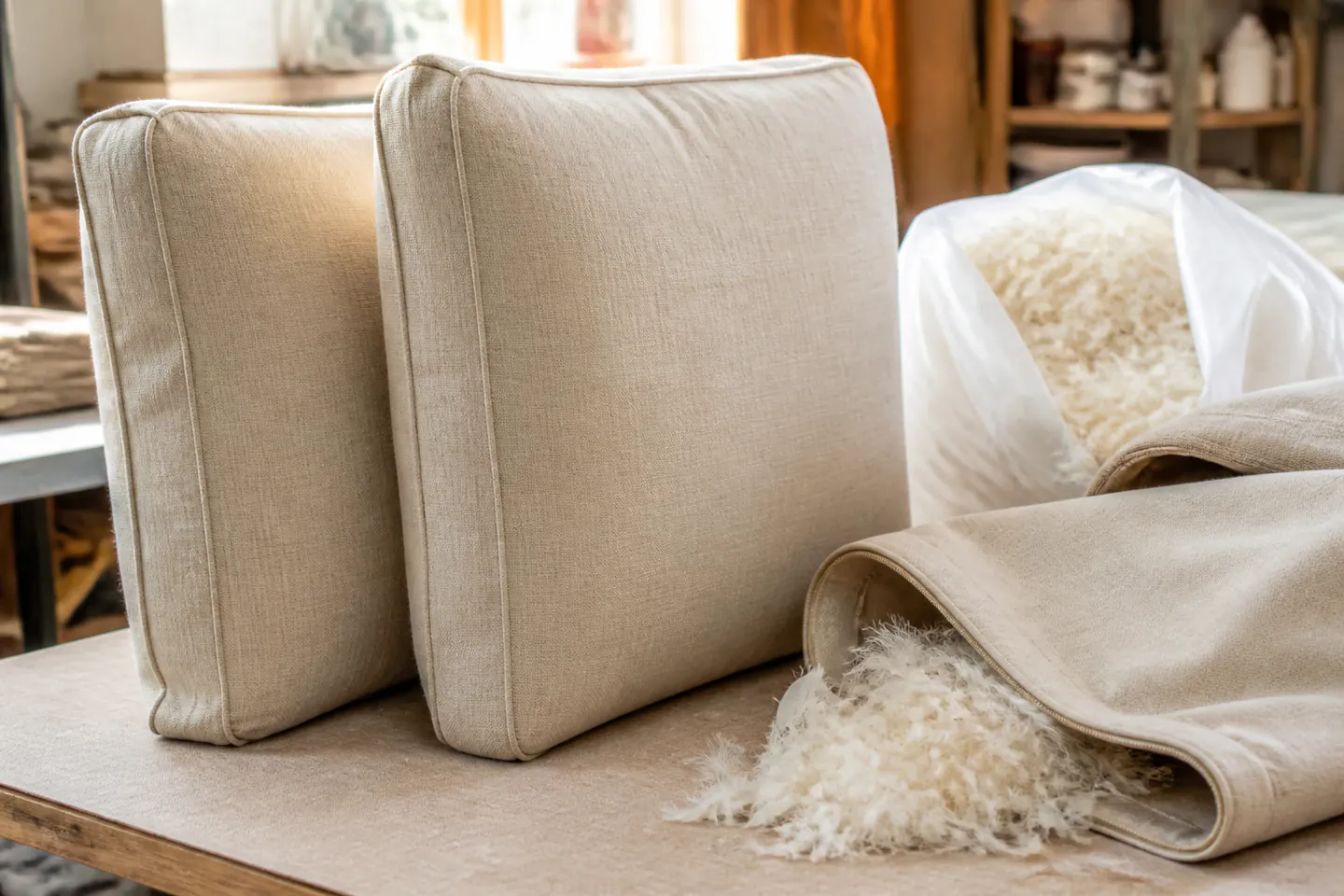 Cushions
Cushion Refilling
Cushion refilling to restore shape, comfort and everyday support.
View service
Cushions
Cushion Refilling
Cushion refilling to restore shape, comfort and everyday support.
View service
 Frames
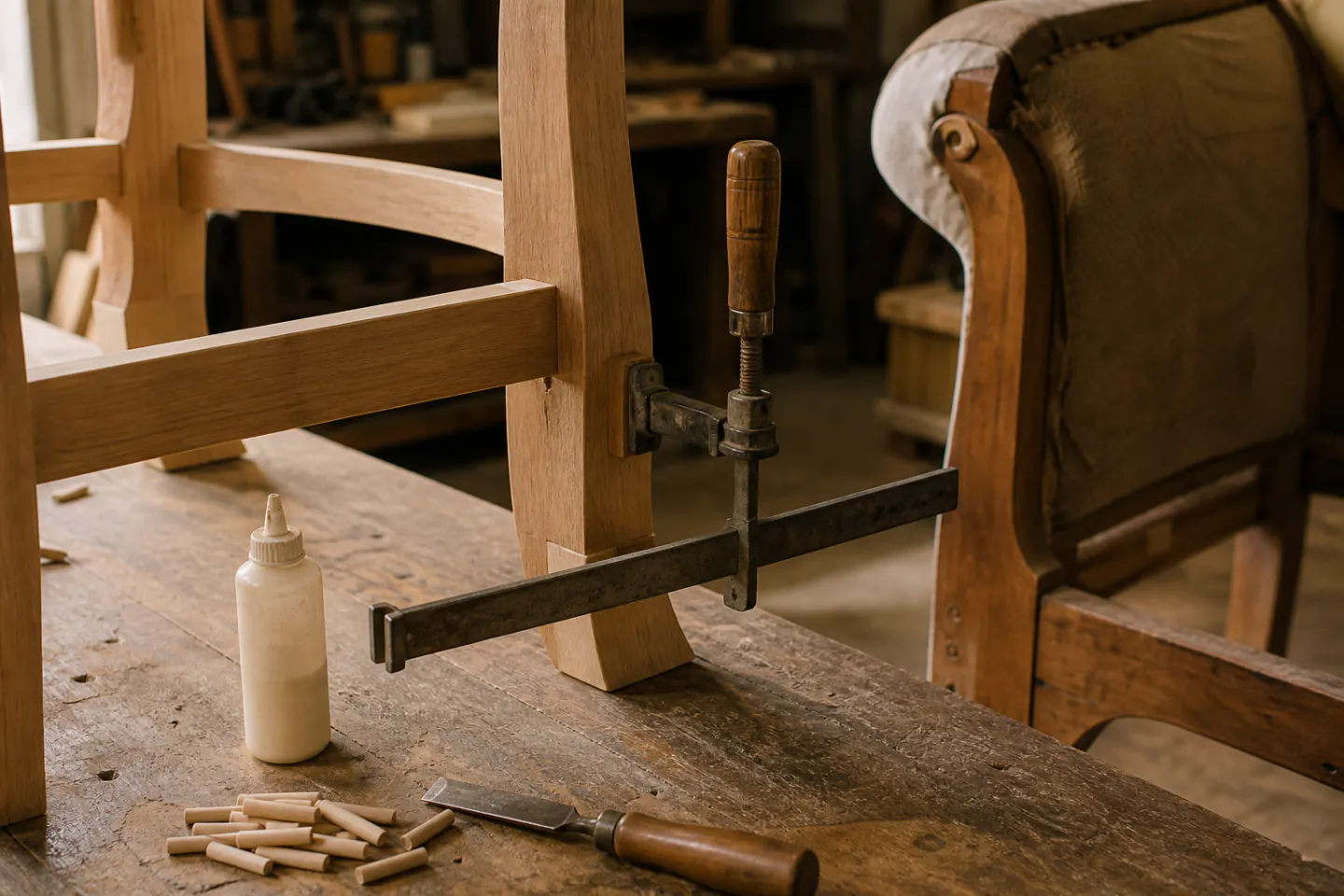
Frame Repair
Loose joints, damaged arms and frame reinforcement where practical.
View service
Frames
Frame Repair
Loose joints, damaged arms and frame reinforcement where practical.
View service
 Leather
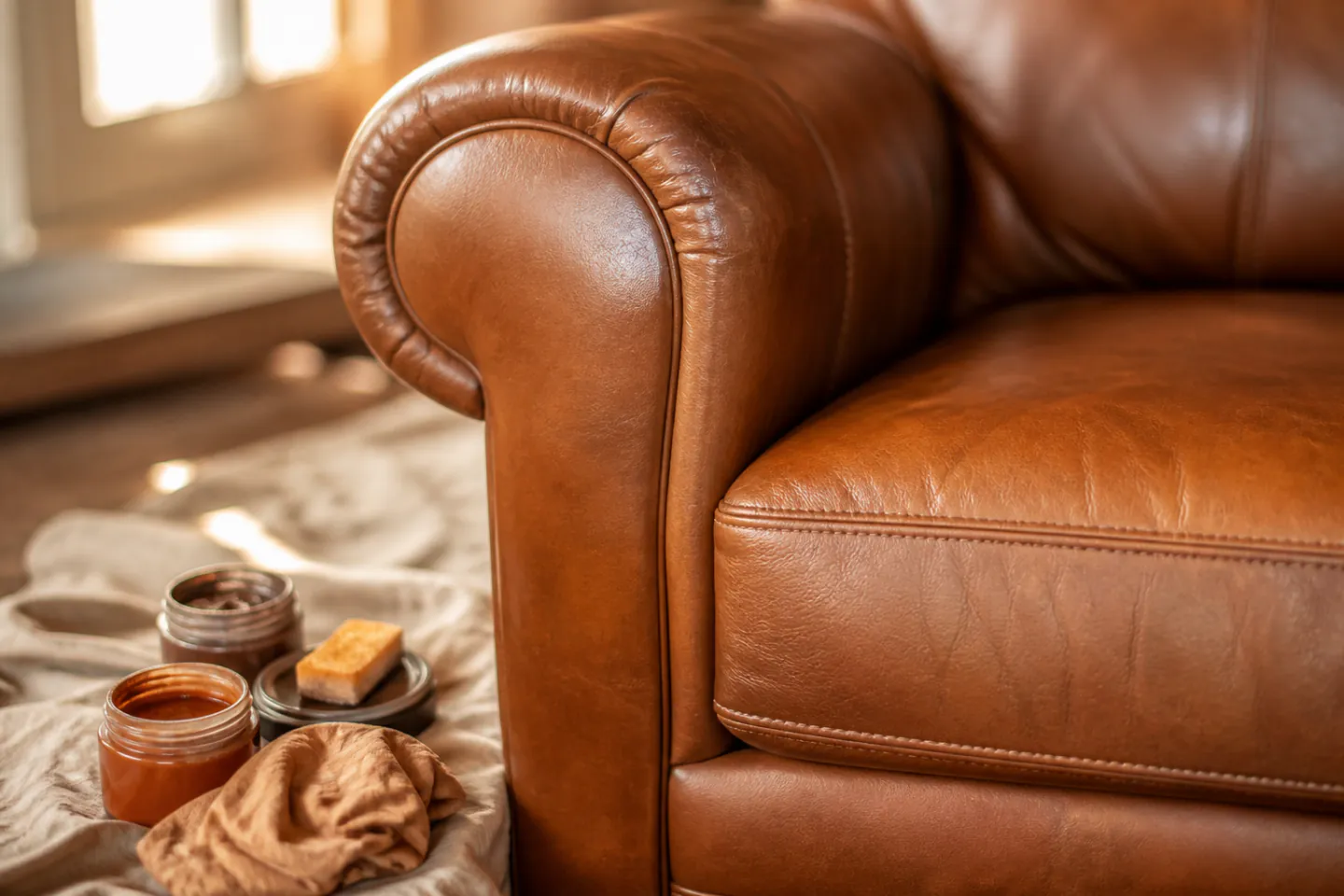
 Repair
Leather repair, colour work and recovery options for worn seating.
View service
Leather
Leather Repair
Leather repair, colour work and recovery options for worn seating.
View service
 Antiques
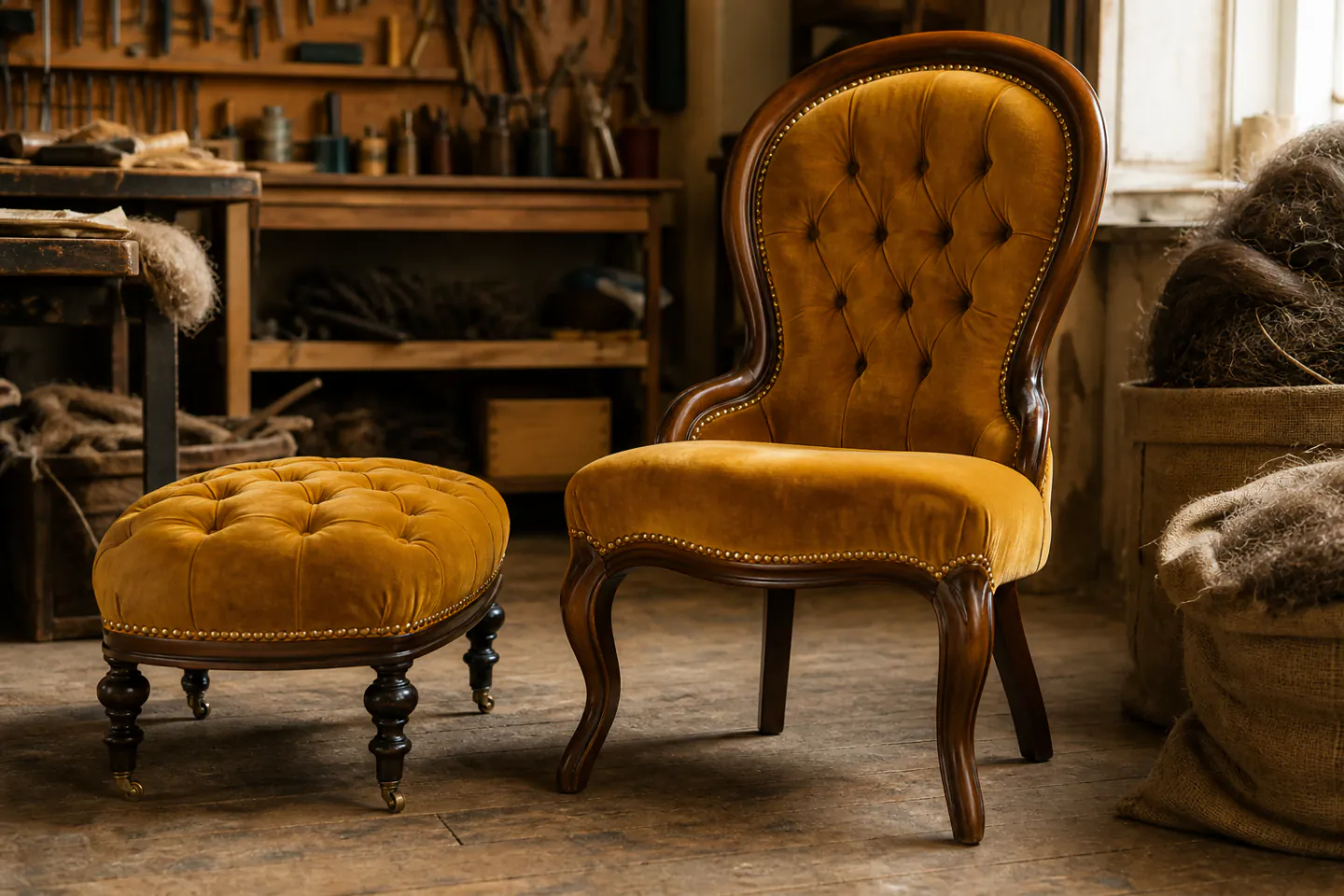
Antique Furniture Restoration
Careful restoration for antique and character furniture pieces.
View service
Antiques
Antique Furniture Restoration
Careful restoration for antique and character furniture pieces.
View service